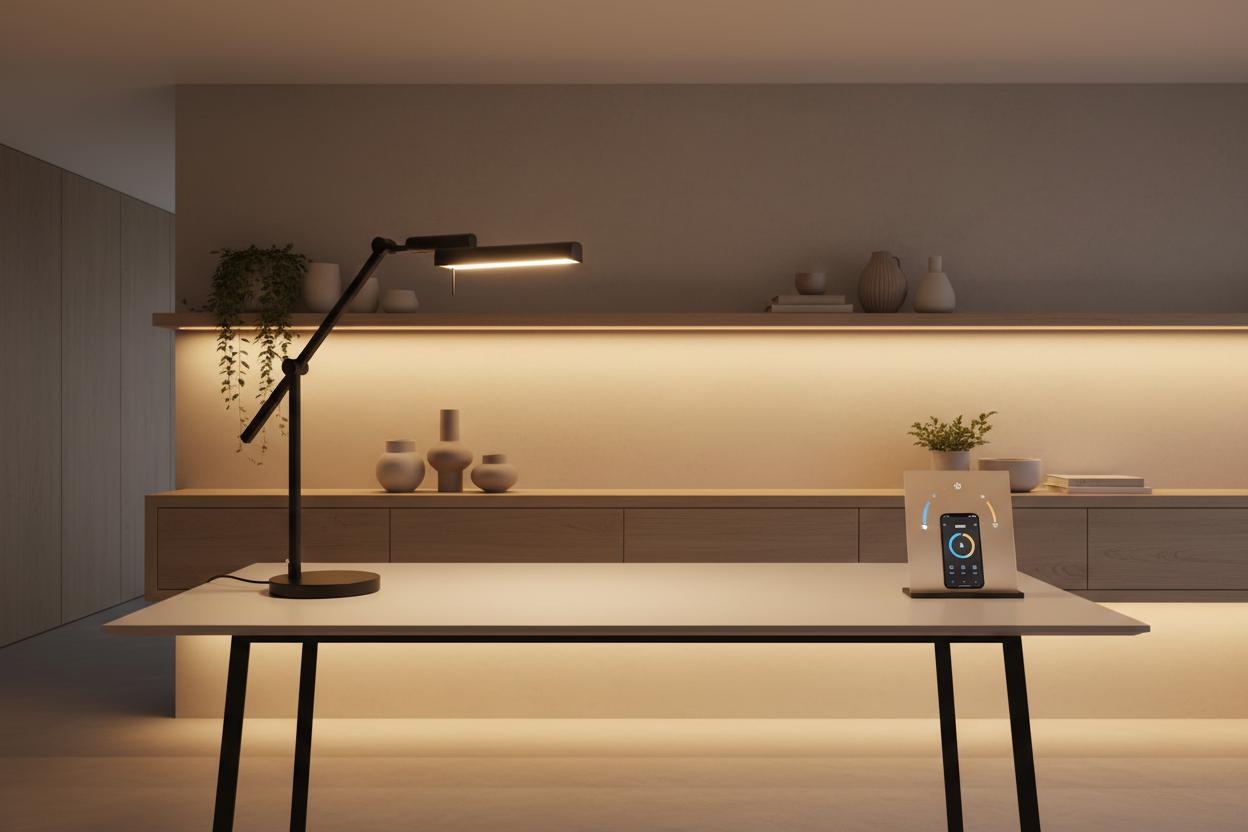
Transform Your Living Space with Smart Dimmable LED Lighting
Walking into a room and having the lights automatically adjust to your preferred brightness—that's not science fiction anymore. Smart dimmable LED lights have revolutionized how we illuminate our homes, offering unprecedented control, energy savings, and ambiance customization. Whether you're setting up a new smart home or upgrading your existing lighting, understanding how dimmable LEDs integrate with modern home automation systems can help you make informed decisions that enhance both comfort and efficiency.
Understanding Dimmable LED Technology
Traditional incandescent bulbs dimmed naturally when you reduced voltage, but LED technology works differently. Dimmable LEDs use pulse-width modulation (PWM) or analog dimming to control brightness levels without compromising light quality or bulb lifespan. This technology allows you to adjust lighting from a soft 10% glow perfect for movie nights to full 100% brightness when you need task lighting.
The real game-changer comes when you pair dimmable LEDs with smart home systems. Modern fixtures like the 42 inch Black Wood Ceiling Fan with Lights and Remote Control ($186.99) combine dimmable LED technology with color temperature adjustment (3100K to 6500K), giving you complete control over your lighting environment.

This particular model features a whisper-quiet DC motor and six-speed settings, making it ideal for bedrooms where you want both cooling and customizable lighting.
Smart Home Integration: Platforms and Compatibility
When selecting dimmable LED lights for smart home integration, compatibility with your existing ecosystem matters. Most smart lighting systems work with major platforms including Amazon Alexa, Google Home, Apple HomeKit, and Samsung SmartThings. The key is choosing fixtures that either have built-in smart capabilities or work seamlessly with smart switches and hubs.
Wireless Control Options
Remote control functionality has become standard in quality dimmable LED fixtures. Take the 6V/2.4W Aluminium Retro Sensor Solar Lights with Dimmable LED ($160.99)—these outdoor lights feature dual-color settings and remote power control, plus they're solar-powered, eliminating wiring concerns entirely.

The built-in light sensor automatically turns them on at dusk and off at dawn, perfect for pathways and garden areas.
For larger spaces, ceiling fans with integrated smart lighting offer exceptional value. The 72 Inches Ceiling Fan LED Large Black Double Finish Remote Control ($540.99) provides three color temperature settings (3000K, 4000K, 6000K) with full dimming capability.

Its 24-watt LED system delivers ample illumination while the reversible motor ensures year-round comfort—cooling in summer, improved circulation in winter.
Color Temperature and Dimming: Creating the Perfect Atmosphere
One of the most underappreciated features of modern dimmable LED systems is adjustable color temperature. Different activities and times of day benefit from different lighting characteristics:
- Warm White (2700K-3000K): Creates a cozy, relaxing atmosphere perfect for evenings and bedrooms
- Neutral White (3500K-4000K): Balanced lighting ideal for kitchens, bathrooms, and general living areas
- Cool White (5000K-6500K): Energizing daylight-equivalent light excellent for task areas, home offices, and garages
The Angular Arched Metal Floor Lamp ($190.22) demonstrates how traditional fixtures can incorporate LED technology.

While this particular model isn't dimmable, it showcases the energy efficiency of LED bulbs—using just 9W to provide ample reading light. When shopping for smart integration, look for similar fixtures that specify dimming compatibility.
Installation Considerations for Smart Dimmable LEDs
Installing smart dimmable LED fixtures ranges from simple plug-and-play to more complex hardwired installations. Here's what you need to know:
Retrofit vs. New Installation
If you're working with existing fixtures, smart bulbs offer the easiest upgrade path. Simply replace your current bulbs with smart LED versions and control them via app or voice commands. However, dedicated smart fixtures often provide better integration and more features.
For new installations or major renovations, consider fixtures with built-in smart capabilities. The 15.75 in LED Ceiling Light Fixture 24W ($115.99) offers five color temperature modes (2700K to 5000K) selectable during installation.

While it requires hardwiring, this flush-mount design provides 2400 lumens—equivalent to a 150W incandescent—while using just 24W of power. That's over 90% energy savings with a 50,000-hour lifespan.
Dimmer Switch Compatibility
Not all LED bulbs work with traditional dimmer switches. If you're keeping existing dimmers, verify that your chosen LED fixtures are compatible. Many modern smart fixtures bypass this issue entirely by including remote controls or app-based dimming, eliminating the need for wall-mounted dimmers.
Energy Efficiency and Cost Savings
The financial case for dimmable LED lights becomes compelling when you examine long-term costs. LEDs use 75-80% less energy than incandescent bulbs and last 25 times longer. When you add dimming capability, you extend bulb life even further while reducing energy consumption.
Consider a typical living room with five 60W incandescent bulbs running four hours daily. That's 1,200 watts per day or 438 kWh annually. Replacing them with 9W LED equivalents drops consumption to 180 watts daily or 65.7 kWh yearly—a savings of 372.3 kWh. At the national average of $0.14 per kWh, that's $52 saved annually from one room alone.
Smart dimming amplifies these savings. Studies show that dimming lights by just 25% can extend LED lifespan by 4-5 times while reducing energy use proportionally. Over a fixture's lifetime, this translates to hundreds of dollars in savings.
Smart Scheduling and Automation
The true power of smart dimmable LEDs emerges when you automate them. Modern systems allow you to create schedules and scenes that adjust lighting based on time, occupancy, or activity.
Circadian Rhythm Lighting
Your body's natural sleep-wake cycle responds to light color and intensity. Smart dimmable LEDs can mimic natural daylight patterns: bright, cool light in the morning to promote alertness, neutral tones during midday, and warm, dimmed lighting in the evening to support melatonin production.
Set your bedroom ceiling fan to gradually brighten with cool white light at 6:30 AM, simulating sunrise. In the evening, program it to shift to warm white at 30% brightness, signaling your body that it's time to wind down.
Occupancy-Based Control
Motion sensors paired with smart dimmable lights eliminate the need to fumble for switches. Hallway lights can automatically illuminate at 20% brightness when you walk by at night, providing safe navigation without disrupting sleep. During daytime, the same hallway might brighten to 80% when occupied.
Outdoor Smart Lighting Solutions
Smart dimmable LED technology isn't limited to indoor spaces. Outdoor lighting benefits enormously from automation and remote control, enhancing security, safety, and curb appeal.
Solar-powered options like the Aluminium Retro Sensor Solar Lights eliminate wiring challenges while providing smart functionality. These fixtures charge during the day and automatically illuminate at dusk, with remote control allowing you to adjust brightness and color temperature as needed. The IP54 rating ensures weather resistance, while the 9-11 hour runtime provides all-night illumination.
For covered outdoor areas like patios and porches, consider ceiling fans with integrated dimmable LED lights. They provide cooling comfort during warm evenings while the adjustable lighting creates the perfect ambiance for outdoor entertaining.
Voice Control Integration
Voice assistants have transformed how we interact with smart lighting. Instead of reaching for a switch or phone, simple voice commands control your entire lighting system:
- "Alexa, dim the living room lights to 30%"
- "Hey Google, set the bedroom to warm white"
- "Siri, turn on movie mode"
These commands can trigger individual fixtures or entire scenes involving multiple lights throughout your home. Movie mode might dim living room lights to 10%, turn off kitchen lights, and set accent lighting to warm white—all with a single command.
Troubleshooting Common Issues
Even the best smart dimmable LED systems occasionally encounter problems. Here are solutions to common issues:
Flickering or Buzzing
If your dimmable LEDs flicker or buzz, the issue usually stems from incompatible dimmer switches. LED-specific dimmers use different technology than those designed for incandescent bulbs. Upgrading to an LED-compatible dimmer typically resolves the problem. Alternatively, choose fixtures with built-in dimming that don't rely on wall switches.
Connectivity Problems
Smart lights losing connection to your network? Start by checking your Wi-Fi signal strength in the affected area. Many smart fixtures operate on 2.4GHz networks, which offer better range than 5GHz but can become congested in dense neighborhoods. Consider adding a Wi-Fi extender or mesh network node to improve coverage.
Inconsistent Dimming
If lights don't dim smoothly or have a limited dimming range, verify that all bulbs in a fixture are identical. Mixing LED brands or wattages can cause uneven dimming. Also ensure your smart hub firmware is current—manufacturers regularly release updates that improve dimming performance.
Future-Proofing Your Smart Lighting Investment
Technology evolves rapidly, but you can make choices today that keep your lighting system relevant for years:
Choose Open Standards
Fixtures supporting Zigbee, Z-Wave, or Matter protocols offer better long-term compatibility than proprietary systems. These open standards ensure your lights will work with future smart home platforms, even if you switch ecosystems.
Prioritize Quality
Cheap LED fixtures might save money initially but often fail prematurely or provide poor light quality. Invest in fixtures from reputable manufacturers that offer warranties and have proven track records. The slightly higher upfront cost pays dividends through reliability and longevity.
Plan for Expansion
Start with high-impact areas like living rooms and bedrooms, then expand gradually. This approach spreads costs while allowing you to learn what features matter most to your household. Many smart lighting systems offer starter kits that include a hub and several fixtures at a discounted price.
Maximizing Your Smart Lighting Experience
Getting the most from dimmable LED smart lights requires thoughtful planning and setup. Here are expert tips:
Create Purposeful Scenes
Don't just install smart lights—program them for specific activities. Create scenes for reading (bright, cool white), entertaining (medium, warm white), and relaxing (dim, very warm white). Most systems allow unlimited scenes, so experiment until you find combinations that enhance each activity.
Layer Your Lighting
Professional designers use three lighting types: ambient (general illumination), task (focused work light), and accent (highlighting features). Smart dimmable LEDs excel at all three. Use ceiling fixtures for ambient light, desk lamps for tasks, and directional fixtures for accents. Control them independently or together depending on needs.
Consider Color Rendering
The Color Rendering Index (CRI) measures how accurately light reveals true colors. Look for LEDs with CRI above 80, preferably 90+. This matters especially in kitchens, bathrooms, and anywhere you need to see colors accurately. Many smart fixtures now specify CRI in their specifications.
Smart Lighting for Different Rooms
Living Rooms
Living rooms benefit from versatile lighting that adapts to various activities. Ceiling fans with dimmable LED lights provide both climate control and adjustable illumination. The 42-inch model mentioned earlier offers six speed settings and color-changing capabilities, perfect for spaces that serve multiple purposes throughout the day.
Bedrooms
Bedroom lighting should support relaxation and sleep. Dimmable warm white LEDs help signal your body that it's time to rest. Smart scheduling can gradually dim lights as bedtime approaches, then slowly brighten them in the morning as a gentle wake-up alarm. The whisper-quiet operation of DC motor ceiling fans ensures lighting adjustments don't disturb sleep.
Kitchens and Bathrooms
Task-oriented spaces need bright, neutral lighting for safety and functionality. The 15.75-inch LED ceiling fixture provides 2400 lumens of adjustable color temperature light—bright enough for detailed work but dimmable for late-night visits. Its flush-mount design works well in rooms with lower ceilings.
Outdoor Spaces
Outdoor lighting serves security, safety, and aesthetic purposes. Solar-powered dimmable LEDs offer installation flexibility without electrical work. The automatic dusk-to-dawn operation ensures your property stays illuminated without manual intervention, while remote control allows you to adjust brightness for different occasions.
Making the Switch: Your Action Plan
Ready to upgrade to smart dimmable LED lighting? Follow this roadmap:
- Audit Your Current Lighting: Note which rooms need upgrades and what features matter most in each space
- Choose Your Ecosystem: Decide on a smart home platform based on devices you already own or plan to purchase
- Start with High-Impact Areas: Begin with rooms where you spend the most time or where lighting quality matters most
- Install and Configure: Set up fixtures, connect them to your network, and create initial scenes
- Refine and Expand: Adjust settings based on real-world use, then gradually add fixtures to other areas
Shop our selection of smart dimmable LED ceiling fans to start transforming your home's lighting today.
Frequently Asked Questions
Do all LED lights work with dimmer switches?
No, only LEDs specifically labeled as "dimmable" will work with dimmer switches. Using non-dimmable LEDs with dimmers can cause flickering, buzzing, or premature failure. Many modern smart LED fixtures include built-in dimming via remote control or apps, eliminating the need for wall-mounted dimmers.
How much can I save by switching to dimmable LED lights?
LED lights use 75-80% less energy than incandescent bulbs and last 25 times longer. A typical household can save $200-300 annually on electricity costs by switching to LEDs. Dimming capability extends these savings further—reducing brightness by 25% can quadruple bulb lifespan while proportionally reducing energy consumption.
Will smart LED lights work if my internet goes out?
Most smart LED fixtures retain basic functionality during internet outages. You can typically control them via physical switches, remote controls, or Bluetooth connections. However, voice commands, remote access via smartphone apps, and automated schedules that rely on cloud services won't function until connectivity is restored.
Can I use smart LED bulbs in any fixture?
Smart LED bulbs work in most standard fixtures, but check three things: base type (E26, E12, etc.), physical size (some smart bulbs are larger than traditional bulbs), and whether the fixture is enclosed (some smart bulbs require ventilation). For best results, consider fixtures designed specifically for LED technology.
What's the difference between warm white and cool white LEDs?
Color temperature, measured in Kelvin (K), determines the appearance of white light. Warm white (2700K-3000K) has a yellowish tone similar to incandescent bulbs, creating cozy atmospheres. Cool white (5000K-6500K) appears bluish, mimicking daylight and promoting alertness. Neutral white (3500K-4000K) falls between these extremes. Many smart fixtures let you adjust color temperature to suit different activities and times of day.
How long do dimmable LED lights last?
Quality dimmable LED fixtures typically last 25,000-50,000 hours—that's 15-30 years at average usage rates. Dimming extends lifespan even further by reducing heat and electrical stress. This longevity means you'll replace LED fixtures far less frequently than traditional bulbs, saving money and reducing waste.
Are solar-powered dimmable LEDs bright enough for security lighting?
Modern solar LED technology has improved dramatically. Quality solar fixtures like the 6V/2.4W Aluminium Retro Sensor Solar Lights provide 9-11 hours of illumination after a full charge. While they may not match hardwired fixtures for raw brightness, they're sufficient for pathway lighting, accent lighting, and supplemental security lighting. For primary security lighting, consider hardwired LED fixtures with higher lumen output.
Can I control different rooms' lights separately with smart LEDs?
Yes, smart lighting systems allow granular control. You can group fixtures by room, floor, or any custom arrangement. This enables you to control individual lights, entire rooms, or your whole house with a single command. Most systems also support scenes that control multiple rooms simultaneously—for example, a "goodnight" scene that turns off all downstairs lights while dimming bedroom lights to 20%.
Do dimmable LED ceiling fans use more energy than regular ceiling fans?
No, LED lighting uses minimal energy regardless of dimming capability. The fan motor accounts for most energy consumption. DC motor ceiling fans, like the models mentioned in this guide, use 65% less energy than traditional AC motor fans. The LED lights typically consume 18-24 watts even at full brightness—far less than the 50-75 watts used by incandescent bulbs in older ceiling fans.
What should I look for when buying smart dimmable LED lights?
Prioritize these features: compatibility with your smart home ecosystem (Alexa, Google Home, etc.), adjustable color temperature (2700K-6500K range), high CRI (80+) for accurate color rendering, adequate brightness (measured in lumens) for your space, energy efficiency (look for Energy Star certification), warranty coverage (minimum 2-3 years), and user reviews confirming reliable dimming performance without flickering.
Conclusion: Illuminating Your Smart Home Future
Dimmable LED lights integrated with smart home systems represent more than just a lighting upgrade—they're an investment in comfort, efficiency, and modern living. From energy savings that pay for themselves within a few years to the convenience of voice-controlled ambiance, smart dimmable LEDs enhance daily life in countless ways.
Whether you're starting with a single room or planning a whole-home transformation, the technology has matured to the point where installation is straightforward, compatibility is broad, and reliability is excellent. The fixtures highlighted in this guide—from versatile ceiling fans to elegant floor lamps and weather-resistant outdoor lights—demonstrate the range of options available to suit any space and budget.
The future of home lighting is here, and it's smarter, more efficient, and more customizable than ever before. Take the first step toward transforming your living space with intelligent illumination that adapts to your lifestyle.
Explore our complete collection of smart dimmable LED lighting solutions and discover how the right lighting can transform your home.
