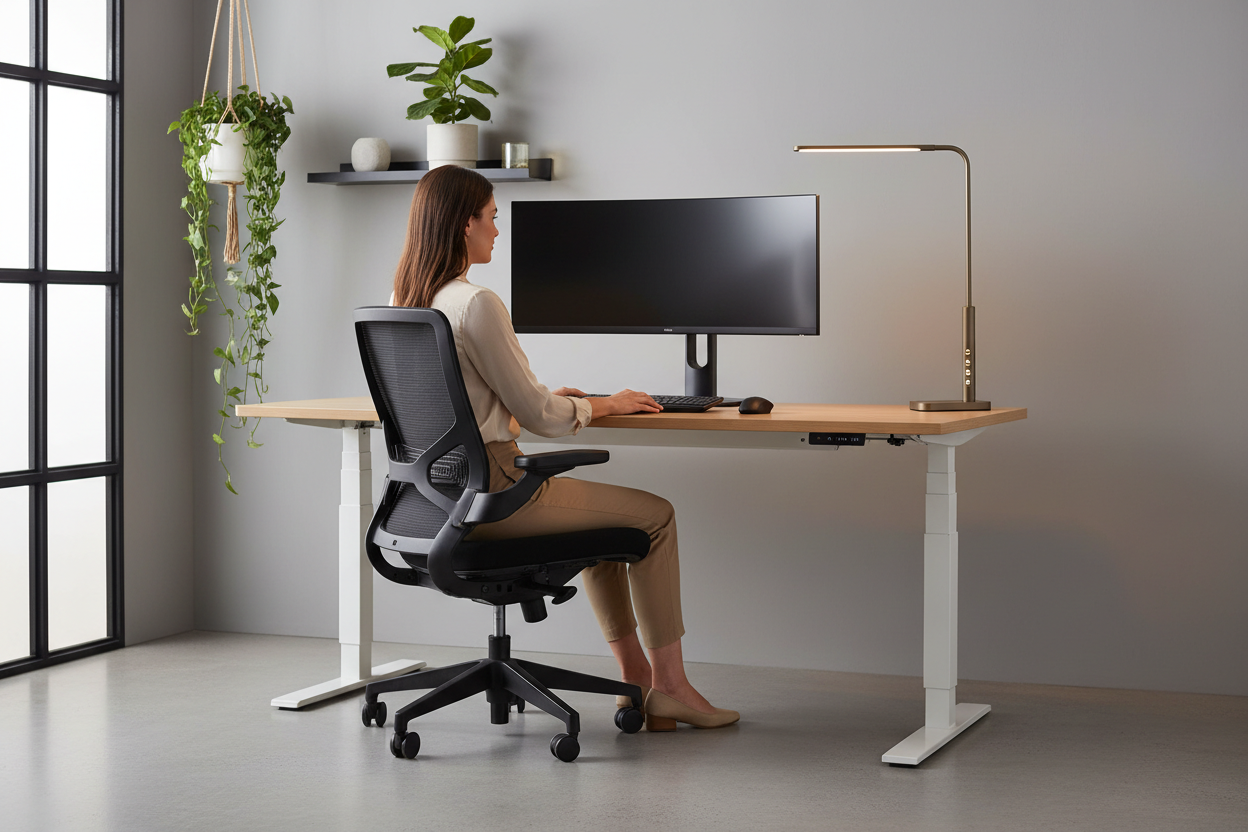
You've invested in your Apple ecosystem—MacBook, iMac, maybe an iPad or two. Now comes the question that's probably been nagging at you: should you go with wood or metal stands to complete your setup?
Here's the thing. This isn't just about looks (though that matters). It's about how your workspace feels, how long your gear lasts, and whether you'll still love your setup six months from now. Let's break down what actually matters when choosing between wood and metal stands for your Apple devices.
Why Your Stand Material Actually Matters More Than You Think
Walk into any Apple Store, and you'll notice something. Everything feels intentional. The materials, the spacing, even the temperature of the room. Apple's design language speaks to quality, and your workspace should echo that same philosophy.
The stand you choose becomes part of your daily ritual. It's what you see first thing in the morning, what supports your device during those long work sessions, and what guests notice when they walk into your home office. Material choice affects thermal management, acoustic properties, durability, and yes—the overall vibe of your space.
The Case for Metal: Precision Engineering Meets Apple's DNA
Metal stands share Apple's design DNA. That's not an accident. Aluminum, in particular, is what Apple uses for MacBook chassis, iMac bodies, and iPad frames. There's a visual coherence when metal meets metal.
Thermal Performance You Can Actually Feel
Here's something most people don't consider: aluminum conducts heat 15 times better than wood. When your MacBook is running intensive tasks, a metal stand helps dissipate that heat. You're not just elevating your laptop—you're extending its lifespan by keeping components cooler.
The Rackora Gaming Laptop Stand Elite Edition ($79.99) takes this seriously. Its aluminum construction creates a passive cooling system that works silently in the background. No fans, no noise—just physics doing its job.

Durability That Outlasts Your Upgrade Cycle
Metal doesn't warp. It doesn't crack from humidity changes. Drop something on it? It might dent, but it won't shatter. This matters if you're the type who keeps gear for years, not months.
For dual monitor setups, the Full Motion Single Monitor Arm ($139.99) demonstrates what metal engineering can achieve. Gas spring mechanisms, VESA compatibility, and weight capacity that handles even the largest displays—all because metal provides the structural integrity needed for precision movement.

The Minimalist Aesthetic
Metal stands tend toward minimalism. Clean lines, no ornamentation, just function expressed through form. If your workspace leans modern or industrial, metal reinforces that language. It's the visual equivalent of a well-written line of code—nothing extra, everything essential.
The Case for Wood: Warmth in a Digital World
But here's where things get interesting. Wood brings something metal can't: organic warmth. In a world of glass and aluminum, wood grounds your space. It's the counterbalance to all that technology.
Acoustic Properties That Actually Matter
Wood absorbs sound. Metal reflects it. If you're on video calls all day, this isn't trivial. A wooden desk or stand creates a slightly warmer acoustic environment. Your voice sounds more natural, less tinny. It's subtle, but professionals notice.
The Biophilic Design Advantage
Research shows that natural materials reduce stress and improve focus. It's called biophilic design—the idea that humans perform better when connected to natural elements. A wooden stand isn't just furniture; it's a psychological anchor in your digital workspace.
The Rackora Hamburg Wood TV Stand ($439.99) exemplifies this approach. Rich brown tones, natural grain patterns, and solid construction that feels substantial. It's not trying to disappear—it's making a statement about valuing craftsmanship.

Aging Gracefully vs. Aging Poorly
Here's the paradox: metal stays looking new longer, but wood develops character. Scratches on metal look like damage. Scratches on wood look like patina. If you're building a workspace you'll use for a decade, wood ages with you rather than against you.
Hybrid Solutions: Getting the Best of Both Worlds
Why choose? Some of the smartest designs combine materials strategically.
The Modern Acacia Wood & Tempered Glass TV Stand ($550.99) pairs acacia wood with tempered glass and metal hardware. You get wood's warmth, glass's transparency, and metal's structural precision. It's material honesty—each component doing what it does best.

For laptop users, the Rackora Ergo Laptop Stand Elite Edition ($79.99) uses aluminum for the frame but incorporates silicone pads to protect your MacBook's finish. It's a thoughtful detail that shows understanding of how materials interact.

Matching Your Stand to Your Apple Device Lineup
Let's get practical. What you own should influence what you buy.
For MacBook Users
If you're primarily using a MacBook, metal stands create visual continuity. The aluminum-to-aluminum contact feels right. But if your MacBook lives in a home office with wooden furniture, a wood stand might integrate better with the broader environment.
Consider your usage pattern. Mobile workers who move their setup frequently benefit from metal's durability. Home office users who value aesthetics might prefer wood's warmth.
For iMac and Studio Display Setups
Large displays need serious support. This is where metal's structural advantages become non-negotiable. The Rackora Dual Monitor Desk Mount ($99-$139) handles 17-32 inch displays with gas spring precision. Wood simply can't provide the same adjustability and weight capacity.
For Media Centers and Entertainment Setups
When your Apple TV connects to a larger entertainment system, the stand becomes furniture, not just a tech accessory. Here, wood often wins. It integrates with living room aesthetics better than industrial metal.
The Deluxe Sculpted Modern Fashion Geometric Style TV Stand ($390.07) splits the difference with an aluminum frame and tempered glass doors. It's modern enough for tech, refined enough for a living room.

The Environmental Consideration
Let's talk sustainability, because it matters.
Aluminum is infinitely recyclable without quality loss. That's significant. But mining and processing aluminum is energy-intensive. Wood, when sourced responsibly, is carbon-negative—trees absorb CO2 as they grow.
The honest answer? Both materials can be sustainable or destructive depending on sourcing and manufacturing practices. Look for FSC-certified wood or recycled aluminum content. Better yet, buy quality pieces that last decades rather than cheap items you'll replace in years.
Price Points and Value Propositions
Generally speaking, metal stands cost less at entry level but more at the premium end. Wood pricing varies wildly based on species and construction quality.
A basic aluminum laptop stand might run $30-80. Premium versions with advanced ergonomics reach $100-150. Wood stands start around $50 for simple designs but can exceed $500 for solid hardwood construction with complex joinery.
The Manual Height Adjustable Desk ($229) offers a middle ground—metal frame for structural integrity, wood-look top for aesthetic warmth. It's a practical compromise for budget-conscious buyers who want both qualities.

Maintenance Reality Check
Metal requires almost no maintenance. Wipe it down occasionally. Done.
Wood needs more attention. Depending on the finish, you might need to oil it annually, avoid water rings, and keep it away from direct sunlight to prevent fading. But that maintenance ritual can be satisfying—it's caring for something rather than just using it.
Making Your Decision: A Framework
Here's how to actually choose:
Choose metal if:
- You prioritize thermal management for high-performance tasks
- Your aesthetic leans minimalist or industrial
- You need maximum adjustability and weight capacity
- You want zero-maintenance durability
- You're matching Apple's design language directly
Choose wood if:
- You want to soften a tech-heavy environment
- Acoustic warmth matters for your work
- You value biophilic design principles
- Your space has traditional or mid-century modern furniture
- You appreciate materials that develop character over time
Choose hybrid if:
- You want functional precision with aesthetic warmth
- You're building a media center that bridges tech and living space
- You appreciate material honesty in design
- You want the best technical performance without sacrificing visual appeal
The Bigger Picture: Building a Cohesive Workspace
Your stand doesn't exist in isolation. It's part of a larger ecosystem—your desk, your chair, your lighting, your cable management. The best choice is the one that makes the whole system work better.
If you've got a glass desk and metal chair, adding wood creates contrast and visual interest. If you're surrounded by wood furniture, metal stands provide a contemporary counterpoint. Design is about relationships, not individual pieces.
What the Professionals Choose
Photographers and video editors often go metal—they need the adjustability and thermal performance. Writers and designers lean wood—they value the aesthetic warmth and acoustic properties. Developers split both ways depending on whether they prioritize function or environment.
There's no universal right answer. There's only what's right for your specific needs, space, and sensibilities.
Final Thoughts: Trust Your Instincts
You've read the technical arguments. You understand the trade-offs. Now trust your gut.
Which material makes you feel more focused when you sit down to work? Which one will you still appreciate in five years? Which one makes your space feel like yours?
The best stand for your Apple ecosystem is the one that disappears into your workflow while elevating your environment. Whether that's the precision of metal or the warmth of wood depends on who you are and how you work.
Choose wisely. Choose honestly. And choose something you'll actually use every day without regret.
Ready to upgrade your workspace? Explore our curated collection of premium laptop stands, professional monitor mounts, and elegant media consoles designed to complement your Apple ecosystem perfectly.
Frequently Asked Questions
Does a metal stand scratch my MacBook?
Quality metal stands include silicone or rubber contact points specifically to prevent scratching. The Rackora Ergo Laptop Stand Elite Edition uses protective pads at all contact points. Avoid cheap stands without these protective elements—they're the ones that cause damage.
Will a wooden stand warp over time?
Properly finished hardwood stands resist warping in normal indoor conditions. Avoid placing them near heating vents or in direct sunlight. Solid wood construction (not veneer over particleboard) provides the best long-term stability. The key is buying quality construction from the start.
Which material is better for heat dissipation during intensive tasks?
Metal wins decisively here. Aluminum conducts heat approximately 15 times better than wood, making it the clear choice for video editing, 3D rendering, or gaming. If your MacBook regularly runs hot, a metal stand like the Gaming Laptop Stand Elite Edition provides measurable thermal benefits.
Can I mix wood and metal stands in the same workspace?
Absolutely. Mixed materials create visual interest and depth. Use metal for functional pieces that need adjustability (monitor arms, laptop stands) and wood for larger furniture pieces (desks, media consoles). The contrast can be striking when done intentionally rather than accidentally.
How much weight can metal stands typically support compared to wood?
Metal stands generally support more weight in smaller footprints due to superior tensile strength. A metal monitor arm might hold 20+ pounds on a single articulating arm, while wood would need a much larger base for equivalent support. For heavy displays or dual monitor setups, metal is the practical choice.
Are there any health benefits to choosing one material over the other?
Wood offers biophilic design benefits—studies show natural materials reduce stress and improve focus. Metal provides better thermal management, which can extend device lifespan and prevent performance throttling. Both contribute to workspace health in different ways. Choose based on whether psychological comfort or technical performance matters more to your daily work.
What's the typical lifespan difference between wood and metal stands?
Both can last decades with proper care. Metal resists environmental factors better (humidity, temperature swings) but can dent from impacts. Wood requires more maintenance but develops character rather than looking damaged. Quality construction matters more than material choice for longevity.
Do metal stands interfere with wireless signals or Bluetooth?
Modern aluminum stands don't meaningfully interfere with Wi-Fi or Bluetooth signals. Your MacBook's antennas are designed to work in metal environments (they're inside a metal chassis, after all). This is a non-issue with quality stands.
Which material is easier to clean and maintain?
Metal requires minimal maintenance—just occasional wiping with a damp cloth. Wood needs more attention: avoid water pooling, use appropriate cleaners for the finish type, and potentially re-oil annually for unfinished or oil-finished pieces. If you want zero-maintenance gear, metal is the clear winner.
Can wooden stands support the same ergonomic adjustments as metal ones?
For simple elevation, yes. For complex articulation (gas springs, multi-axis adjustment, cable management), metal provides engineering advantages that wood can't match. If ergonomic flexibility is your priority, especially for monitors, metal stands like the Dual Monitor Desk Mount offer capabilities wood simply cannot replicate at similar price points.
