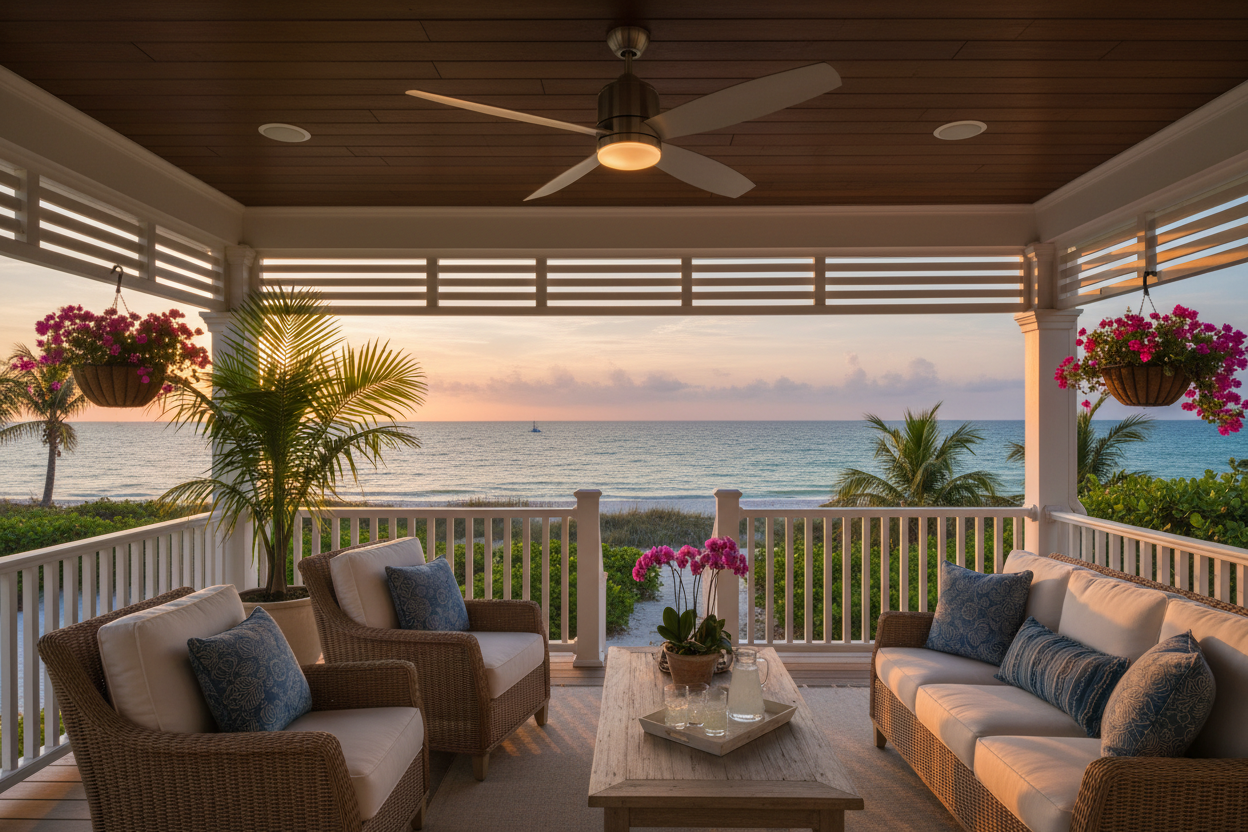
Living in Florida means embracing the coastal lifestyle—warm ocean breezes, stunning sunsets, and outdoor living spaces that feel like an extension of your home. But it also means dealing with humidity, salt air, and moisture that can wreak havoc on standard ceiling fans. If you've ever wondered why your porch fan stopped working after just one season, or why it's covered in rust, you're not alone.
The secret to long-lasting comfort on your Florida porch isn't just any ceiling fan—it's a damp-rated fan specifically designed to handle the unique challenges of coastal living. Let's dive into why these fans are essential for your outdoor space and how to choose the perfect one.

Understanding Damp-Rated vs. Wet-Rated vs. Dry-Rated Fans
Before we get into the specifics of Florida porches, you need to understand the three main categories of ceiling fans and where they belong.
Dry-Rated Fans: Indoor Use Only
These are your standard indoor ceiling fans. They're designed for climate-controlled environments and should never be exposed to moisture. Installing one on your porch—even a covered one—is asking for trouble. The motors aren't sealed, the finishes aren't protected, and the electrical components will corrode faster than you can say "hurricane season."
Damp-Rated Fans: Perfect for Covered Porches
This is where most Florida porch fans fall. Damp-rated fans are built to handle moisture in the air—think humidity, occasional mist, and indirect water exposure. They feature sealed motors, corrosion-resistant finishes, and components designed to withstand condensation. If your porch is covered and protected from direct rain, a damp-rated fan is your best bet.
Wet-Rated Fans: For Direct Weather Exposure
Got a pergola or an uncovered patio? You'll need a wet-rated fan. These are built like tanks, with fully sealed motors and weatherproof housings that can handle direct rain, snow, and everything Mother Nature throws at them. They're overkill for most covered porches, but essential if your fan will see direct weather.
Why Florida Porches Demand Special Attention
You might be thinking, "My porch is covered, so why can't I just use a regular indoor fan?" Here's the reality of Florida living that makes damp-rated fans non-negotiable.

Humidity That Never Quits
Florida's average humidity hovers between 60-80% year-round. That's not just uncomfortable—it's corrosive. Standard ceiling fans have motors and bearings that aren't sealed against moisture. Over time, that constant humidity seeps into the motor housing, causing rust, corrosion, and eventual failure. I've seen indoor fans installed on porches fail within six months because the motor literally seized up from rust.
Salt Air Corrosion
If you're anywhere near the coast—and in Florida, you're never far from the ocean—salt air is your fan's worst enemy. Salt accelerates corrosion exponentially. A standard fan's finish will start pitting and flaking within weeks. The motor components corrode. Even the blade attachments can rust through. Damp-rated fans use marine-grade finishes and corrosion-resistant materials specifically to combat this.
Temperature Swings and Condensation
Florida mornings can be cool and humid, while afternoons are hot and steamy. These temperature swings create condensation on metal surfaces—including inside your fan's motor housing. Damp-rated fans have sealed motors that prevent moisture from getting inside, while standard fans become breeding grounds for rust and electrical shorts.
Afternoon Thunderstorms
Even on a covered porch, those sudden Florida downpours can drive rain sideways. Wind-driven rain can reach areas you'd think were protected. Damp-rated fans are designed with this in mind, featuring drainage channels and sealed electrical connections that won't short out when they get wet.
The Real Cost of Choosing the Wrong Fan
Let's talk dollars and sense. A standard indoor ceiling fan might cost $80-150, while a quality damp-rated fan runs $150-300. It's tempting to save money upfront, but here's what that "savings" actually costs you.
Replacement Costs Add Up Fast
Install a dry-rated fan on your Florida porch, and you're looking at replacement every 1-2 years—sometimes sooner. That $100 fan becomes $500 over five years, plus installation costs each time. A quality damp-rated fan will last 10-15 years in the same environment. The math is simple: spend more once, or spend less repeatedly.
Safety Hazards
Corroded electrical connections aren't just an inconvenience—they're a fire hazard. Moisture getting into a non-sealed motor can cause shorts, sparks, and potentially dangerous situations. Damp-rated fans are UL-listed for moisture exposure, meaning they meet strict safety standards for wet environments.
Performance Degradation
Even before a standard fan fails completely, its performance tanks. Corroded bearings make it wobble and squeak. Rust on the motor reduces efficiency. Blade balance gets thrown off. You end up with a noisy, inefficient fan that barely moves air—exactly when you need it most during those sweltering summer evenings.
Top Features to Look for in a Florida Porch Fan
Not all damp-rated fans are created equal. Here's what separates the great ones from the mediocre.
DC Motor Technology
DC motors are game-changers for outdoor fans. They're 50-70% more energy-efficient than traditional AC motors, which matters when you're running your fan for hours every day. They're also quieter, more reliable, and offer better speed control. The 52-inch Outdoor Ceiling Fan with DC Motor ($194.99) is a perfect example—it uses half the energy of comparable AC motor fans while delivering superior airflow.

Corrosion-Resistant Finishes
Look for powder-coated finishes or marine-grade materials. Brushed nickel, oil-rubbed bronze, and powder-coated white or black finishes hold up best in coastal environments. Avoid cheap painted finishes that will chip and peel.
Sealed Motor Housing
This is non-negotiable. The motor housing should be completely sealed to prevent moisture intrusion. Quality manufacturers will specifically mention "sealed motor" or "moisture-resistant motor housing" in their specifications.
Weather-Resistant Blades
ABS plastic blades are ideal for damp environments—they won't warp, crack, or absorb moisture like wood can. If you prefer the look of wood, make sure it's solid wood with a marine-grade sealant, not MDF or composite materials that will swell and delaminate in humidity.
The 48-inch Ceiling Fan with Solid Wood Blades ($182.49) features genuine walnut blades that are properly sealed for outdoor use, combining aesthetics with durability.

Reversible Motor Function
Florida has two seasons: hot and hotter. But there are times when you want to circulate air differently. A reversible motor lets you switch between downdraft (cooling) and updraft (gentle circulation) modes. This is especially useful during cooler winter evenings when you want air movement without the chill.
Multiple Speed Settings
Six-speed fans give you precise control over airflow. On a breezy evening, you might want just a gentle circulation. During a humid, still afternoon, you'll want maximum airflow. More speed options mean better comfort control.
Remote Control or Smart Features
Nobody wants to get up to adjust their fan constantly. Remote controls are standard on quality fans, but smart features take it to the next level. The 60-inch Smart Outdoor Ceiling Fan ($255.80) offers app control and voice integration with Alexa and Google Home, letting you adjust your fan without leaving your seat—or even being home.

Sizing Your Fan for Maximum Comfort
The biggest mistake people make is choosing a fan based on looks rather than proper sizing. Here's how to get it right.
Room Size Matters
For spaces up to 144 square feet, a 42-44 inch fan works well. For 144-225 square feet, go with 48-50 inches. For 225-400 square feet, you need 52-56 inches. Larger porches over 400 square feet benefit from 60-inch fans or multiple smaller fans.
Most Florida porches fall into the 200-400 square foot range, making 52-inch fans the sweet spot. The 52-inch Farmhouse Outdoor Fan ($194.99) is specifically designed for spaces up to 400 square feet, providing optimal airflow for most covered porch applications.

Ceiling Height Considerations
Standard 8-9 foot ceilings need fans mounted 8-9 feet from the floor. Higher ceilings require downrods to bring the fan into the optimal zone. The blade tips should be at least 7 feet from the floor and 18 inches from walls or railings for safety and efficiency.
Blade Pitch and Airflow
Blade pitch (the angle of the blades) affects airflow dramatically. Look for fans with 12-15 degree blade pitch for maximum air movement. Three-blade designs are typically more efficient than five-blade designs, despite what you might think—fewer blades mean less drag and better airflow.
Installation Considerations for Coastal Environments
Even the best damp-rated fan can fail if it's not installed correctly. Here's what you need to know.
Electrical Box Requirements
Your fan needs a proper ceiling box rated for fan support—typically 50-70 pounds. Standard light fixture boxes aren't strong enough and can fail catastrophically. In damp locations, use a weatherproof electrical box with a gasket seal.
Wiring Protection
All wiring connections should be made inside the sealed electrical box, never exposed. Use weatherproof wire nuts and consider dielectric grease on connections to prevent corrosion. If you're not comfortable with electrical work, hire a licensed electrician—this isn't the place to cut corners.
Mounting Height and Clearance
Proper mounting height ensures safety and efficiency. Too low, and you risk head injuries. Too high, and airflow effectiveness drops. The ideal height is 8-9 feet from the floor to the blade tips, with at least 18 inches of clearance from walls, railings, and other obstructions.
Structural Support
Porches often have different framing than interior rooms. Make sure you're mounting to solid framing members, not just ceiling panels. If your porch has a vaulted or angled ceiling, you'll need an angled mounting kit to keep the fan level.
Maintenance Tips for Long-Lasting Performance
Even damp-rated fans need some TLC to perform their best in Florida's harsh environment.
Regular Cleaning
Salt and humidity create a sticky film on fan blades that attracts dust and reduces efficiency. Clean your blades monthly with a damp cloth and mild soap. Avoid harsh chemicals that can damage protective finishes.
Annual Inspections
Once a year, check all mounting screws and blade attachments. Vibration can loosen connections over time. Tighten any loose screws and check for signs of corrosion or wear.
Motor Maintenance
Most modern DC motors are maintenance-free, but it's worth checking the manufacturer's recommendations. Some may benefit from occasional lubrication of bearings, though many are sealed and require no maintenance.
Finish Protection
If you notice any chips or scratches in the finish, touch them up immediately to prevent corrosion from starting. Most manufacturers offer touch-up paint for their finishes.
Energy Efficiency and Cost Savings
Running a ceiling fan costs significantly less than air conditioning, but the savings multiply with efficient fans.
DC Motor Efficiency
A typical AC motor fan uses 60-80 watts on high speed. A comparable DC motor fan uses 30-40 watts—literally half the energy. Over a Florida summer where you might run your fan 8-10 hours daily, that's substantial savings. At $0.12 per kWh, an AC motor fan costs about $26 per season to run, while a DC motor fan costs just $13.
Reducing AC Usage
The real savings come from reducing air conditioning use. A ceiling fan creates a wind chill effect that makes you feel 4-6 degrees cooler. This means you can set your thermostat higher (or turn off AC entirely on mild days) and still feel comfortable. For every degree you raise your thermostat, you save about 3% on cooling costs.
Year-Round Utility
In Florida, you'll use your porch fan year-round. Even in winter, there are warm days when air circulation makes outdoor living more comfortable. The reversible motor function means you can use gentle updraft circulation on cooler evenings without creating a chill.
Style Considerations for Florida Homes
Functionality is crucial, but your fan should also complement your home's aesthetic.
Coastal and Tropical Styles
White or brushed nickel finishes work beautifully with coastal decor. Clean lines and simple blade designs keep the focus on your view rather than the fan itself. Three-blade designs tend to look more modern and streamlined.
Farmhouse and Traditional
Wood-tone blades and oil-rubbed bronze or matte black finishes suit farmhouse and traditional styles. The farmhouse aesthetic is hugely popular in Florida, blending rustic charm with modern functionality.
Modern and Contemporary
Sleek profiles, matte black or brushed nickel finishes, and minimalist blade designs work for modern homes. Look for fans with integrated LED lighting for a cohesive, contemporary look.
Lighting Integration
Many porch fans include integrated lighting, which can be a great space-saver. The 52-inch Indoor/Outdoor Fan with LED Light Kit ($138.99) offers adjustable color temperature lighting, letting you switch from warm ambient light for evening entertaining to bright task lighting when you need it.

Common Mistakes to Avoid
Learn from others' mistakes so you don't have to make them yourself.
Choosing Based on Price Alone
The cheapest fan is rarely the best value. A $60 fan that lasts two years costs more in the long run than a $200 fan that lasts fifteen years. Factor in replacement costs, installation labor, and the hassle of dealing with failures.
Ignoring the Damp Rating
"It's under a roof, so it should be fine" is the most common justification for installing a dry-rated fan on a porch. Don't do it. The rating exists for a reason, and Florida's environment will prove it to you—expensively.
Improper Sizing
A fan that's too small won't move enough air. A fan that's too large can be overwhelming and inefficient. Measure your space and choose accordingly.
Skimping on Installation
Improper installation voids warranties and creates safety hazards. If you're not confident in your electrical and carpentry skills, hire a professional. The $150-300 installation cost is worth the peace of mind.
Forgetting About Maintenance
Even the best fan needs occasional attention. Set a reminder to clean and inspect your fan regularly. A little preventive maintenance goes a long way.
Making Your Decision: What to Buy
With all this information, let's break down the best options for different scenarios.
Best Budget Option
If you're working with a tight budget but still want quality, the 52-inch Outdoor Ceiling Fan with DC Motor at $194.99 offers exceptional value. You get a damp-rated fan with energy-efficient DC motor, six-speed control, remote operation, and weather-resistant ABS blades. It's proof that you don't have to spend a fortune to get a reliable outdoor fan.
Best Mid-Range Choice
For those wanting a balance of features and value, the 52-inch Indoor/Outdoor Fan with LED Light Kit ($138.99) is hard to beat. The integrated LED lighting with adjustable color temperature eliminates the need for separate porch lighting, and the reversible motor provides year-round functionality.
Best Premium Option
If you want the ultimate in convenience and features, the 60-inch Smart Outdoor Ceiling Fan ($255.80) delivers. Smart app control, voice integration, 60-inch coverage for larger spaces, and premium construction make it worth the investment for serious outdoor living enthusiasts.
Best for Natural Aesthetics
Love the look of wood but need outdoor durability? The 48-inch Ceiling Fan with Solid Wood Blades ($182.49) gives you genuine walnut blades properly sealed for outdoor use, combining natural beauty with practical performance.
Best Farmhouse Style
The 52-inch Farmhouse Outdoor Fan ($194.99) perfectly captures that modern farmhouse aesthetic while delivering serious performance. The weather-resistant construction and 70% energy efficiency make it as practical as it is attractive.
Real-World Performance: What to Expect
Let's set realistic expectations for how these fans perform in actual Florida conditions.
Cooling Effect
A properly sized damp-rated fan will make your porch feel 4-6 degrees cooler through wind chill effect. On an 85-degree evening with 70% humidity, that's the difference between uncomfortable and pleasant. You won't get arctic air conditioning, but you'll get comfortable outdoor living.
Noise Levels
Quality DC motor fans are remarkably quiet. On low to medium speeds, you'll hear more ambient noise from your surroundings than from the fan itself. On high speed, there will be some air movement noise, but it shouldn't be intrusive or annoying.
Durability Timeline
A quality damp-rated fan should give you 10-15 years of reliable service in Florida conditions with proper maintenance. The motor is typically the longest-lasting component, while finishes may show some wear after 7-10 years depending on your proximity to the coast.
Energy Consumption
Expect DC motor fans to use 25-40 watts on high speed, 15-25 watts on medium, and 8-15 watts on low. That's less than most light bulbs. Running your fan 8 hours daily will cost $10-15 per season in electricity—a fraction of what you'd spend on air conditioning.

Frequently Asked Questions
Can I use a damp-rated fan in a fully enclosed porch?
Absolutely. Damp-rated fans work perfectly in enclosed porches, screened porches, and covered patios. They're actually ideal for these applications because they handle the humidity that builds up in enclosed outdoor spaces. The only time you'd need a wet-rated fan is if the fan will be directly exposed to rain.
How close to the ocean can I install a damp-rated fan?
Damp-rated fans can handle coastal environments, but the closer you are to the ocean, the more important premium finishes and materials become. Within a mile of the ocean, look for fans with marine-grade finishes and stainless steel hardware. Beyond a mile, standard damp-rated fans should perform well. If you're right on the beach with direct salt spray exposure, consider wet-rated fans with enhanced corrosion protection.
Do I need a fan with lights, or should I install separate lighting?
This depends on your porch layout and lighting needs. Fans with integrated lighting are convenient and save on installation costs. However, they typically provide ambient lighting rather than bright task lighting. If you need bright light for reading or dining, consider separate lighting in addition to your fan. If you just need general illumination for evening relaxation, an integrated light kit works great.
How often should I run my porch fan?
Run your fan whenever you're using your porch and want air circulation. Unlike air conditioning, ceiling fans don't cool the air—they cool people through wind chill effect. There's no benefit to running the fan when nobody's on the porch. That said, some people run their fans continuously during summer months to prevent moisture buildup and keep the space fresh.
Can I install a damp-rated fan myself, or do I need an electrician?
If you're comfortable with basic electrical work and have experience with ceiling fan installation, you can install a damp-rated fan yourself. However, you must follow all local electrical codes, use proper weatherproof electrical boxes, and ensure secure mounting to structural framing. If you're not confident in your skills, hiring a licensed electrician is worth the cost for safety and warranty protection. Many manufacturers require professional installation to maintain warranty coverage.
What's the difference between 3-blade and 5-blade fans?
Three-blade fans are typically more efficient and move more air because there's less drag. They also tend to be quieter and work better at higher speeds. Five-blade fans look more traditional and can be slightly quieter at low speeds, but they move less air overall. For outdoor applications where maximum airflow is important, three-blade designs are usually the better choice.
Will a ceiling fan help with mosquitoes?
Yes! This is an underrated benefit of porch fans. Mosquitoes are weak fliers, and the air movement from a ceiling fan makes it difficult for them to land on you. Running your fan on medium to high speed can significantly reduce mosquito problems on your porch. It's not a complete solution, but it's a nice bonus benefit.
How do I know if my existing electrical box can support a ceiling fan?
Ceiling fan boxes must be rated for fan support and properly attached to structural framing. Look for a label on the box indicating it's rated for ceiling fan installation. If your existing box is just a standard light fixture box, it needs to be replaced. Fan-rated boxes are typically marked "For Use With Ceiling Fans" and are secured with heavy-duty brackets to ceiling joists.
Can I use my fan during a thunderstorm?
On a covered porch with a damp-rated fan, yes—the fan is designed to handle moisture and humidity. However, if there's lightning in the immediate area, it's wise to turn off all electrical devices as a precaution. If your porch is getting direct rain exposure during the storm, turn the fan off unless it's wet-rated.
What warranty should I expect on a quality outdoor fan?
Reputable manufacturers typically offer limited lifetime warranties on motors and 1-3 year warranties on other components. Be wary of fans with no warranty or very short warranty periods—it's a sign of low quality. Always register your fan with the manufacturer to activate warranty coverage, and keep your receipt and installation documentation.
Taking Action: Your Next Steps
You now have everything you need to choose the perfect damp-rated fan for your Florida porch. Here's how to move forward:
Step 1: Measure Your Space
Calculate your porch square footage to determine the right fan size. Measure ceiling height to determine if you need a downrod or flush mount.
Step 2: Assess Your Needs
Do you need integrated lighting? Smart features? What's your budget? What style matches your home?
Step 3: Choose Your Fan
Based on your measurements and needs, select from the options we've discussed. Remember that quality pays off in longevity and performance.
Step 4: Plan Installation
Decide whether you'll install it yourself or hire a professional. Ensure you have the proper electrical box and mounting hardware.
Step 5: Enjoy Your Outdoor Space
Once installed, your damp-rated fan will transform your porch into a comfortable outdoor living area you'll use year-round.
Final Thoughts
Your Florida porch should be an oasis—a place to enjoy morning coffee, evening sunsets, and everything in between. The right damp-rated ceiling fan makes that possible by creating comfortable air circulation that works with Florida's climate rather than fighting against it.
Don't make the mistake of treating your porch fan as an afterthought or trying to save money with an indoor fan. Invest in a proper damp-rated fan designed for your environment, and you'll enjoy years of reliable performance and comfortable outdoor living.
The difference between a mediocre porch and an amazing outdoor living space often comes down to comfort—and nothing impacts comfort more than proper air circulation. Choose wisely, install correctly, and maintain regularly. Your porch will thank you, and so will everyone who gathers there.
Ready to transform your porch? Browse our selection of damp-rated outdoor ceiling fans and find the perfect match for your Florida home. Your most comfortable outdoor season is just one fan away.
