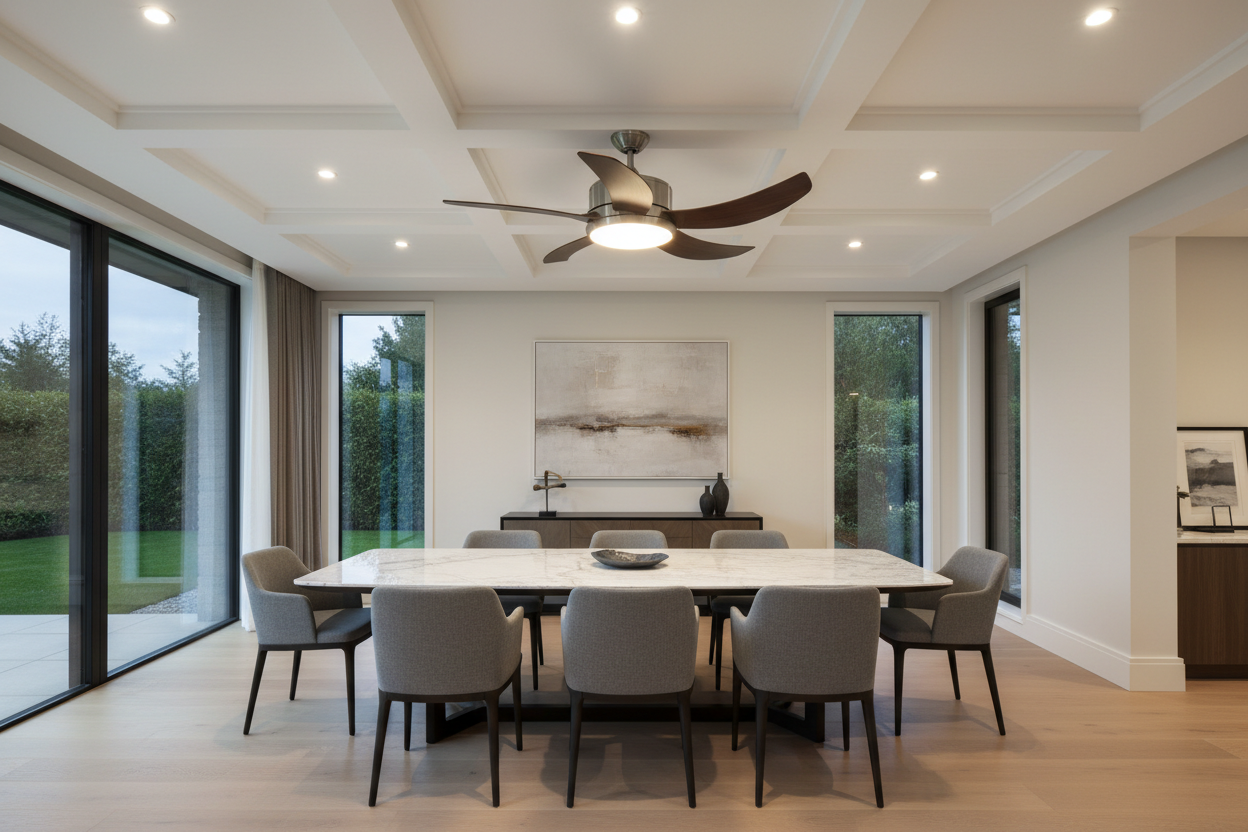
Looking for the perfect ceiling fan to keep your home comfortable while cutting down on energy bills? You're in the right place. After testing dozens of models and talking to homeowners across the country, we've put together this guide to help you find a ceiling fan that actually works for your space.
Whether you're dealing with a cramped bedroom, a sprawling living room, or an outdoor patio that gets way too hot in summer, there's a fan here that'll do the job. Let's dive in.
Why Ceiling Fans Still Matter in 2026
You might be thinking, "Don't we all have AC now?" Sure, but here's the thing—ceiling fans can reduce your cooling costs by up to 40% when used alongside air conditioning. They circulate air more efficiently, which means your AC doesn't have to work as hard.
Plus, modern ceiling fans have come a long way. We're talking smart controls, whisper-quiet motors, and designs that actually look good in your home. No more ugly brass fixtures from the '90s.
What to Look for When Buying a Ceiling Fan
Before we get to the list, here's what you should keep in mind:
- Room size matters: A 20-inch fan works great for small bedrooms, but you'll need 52 inches or more for larger spaces
- Ceiling height: Low-profile fans are perfect for rooms with 8-foot ceilings
- Lighting needs: Some fans come with built-in LED lights, which is super convenient
- Remote control: Trust me, you don't want to be pulling chains in 2026
- Motor quality: DC motors are quieter and more energy-efficient than AC motors
The 7 Best Ceiling Fans for 2026
1. 52" Iron Wood Ceiling Fan with Remote Control - $212.99

This is the fan you want if you're going for that modern farmhouse vibe everyone's talking about. The wood blades give it a warm, natural look that works in pretty much any room—living room, master bedroom, you name it.
What makes this one stand out is the build quality. The iron construction feels solid, and the 52-inch blade span means it can handle rooms up to 400 square feet without breaking a sweat. The remote control is responsive, and you get multiple speed settings to dial in exactly the airflow you need.
One thing I really appreciate? It's quiet. Like, you-can-sleep-with-it-on-high quiet. That's huge if you're putting this in a bedroom.
Best for: Large living rooms, master bedrooms, open-concept spaces
Room size: Up to 400 sq ft
Key features: Wood blades, remote control, quiet operation, reversible motor
Shop the 52" Iron Wood Ceiling Fan →
2. Low Profile Caged Ceiling Fan with Lights and Remote - $243.99

Got low ceilings? This is your fan. The low-profile design means it sits close to the ceiling—perfect for rooms where a standard fan would make you feel like you're in a cave.
The industrial cage design is having a moment right now, and honestly, it looks fantastic. It's got that modern loft aesthetic without being too trendy. Plus, the integrated LED lights mean you don't need a separate fixture, which is great for smaller rooms.
The embedded installation keeps everything flush and clean. No awkward downrod situation. And the remote control has a surprising range—you can adjust it from across the room without any issues.
Best for: Low-ceiling rooms, basements, bedrooms with 8-foot ceilings
Room size: Up to 250 sq ft
Key features: Low-profile design, caged style, integrated LED lights, remote control
Get the Low Profile Caged Fan →
3. 42" Retractable Ceiling Fan with Remote Control - $350.99
Okay, this one's a bit of an investment, but hear me out. The retractable blades are genius. When the fan's off, the blades fold up into the housing, and it just looks like a modern light fixture. When you turn it on, the blades extend automatically.
This is perfect if you want the functionality of a ceiling fan but don't love the look of traditional fans. It's also great for rooms where you need the space to feel open—the retractable design keeps things visually clean.
The motor is incredibly smooth, and the LED lighting is bright enough to be your main light source. You're basically getting a high-end light fixture and a premium fan in one package.
Best for: Modern homes, dining rooms, bedrooms where aesthetics matter
Room size: Up to 300 sq ft
Key features: Retractable blades, sleek design, LED lighting, remote control, quiet DC motor
Shop the Retractable Ceiling Fan →
4. 6-Speed RGB Dimmable LED Enclosed Ceiling Fan - $174.99
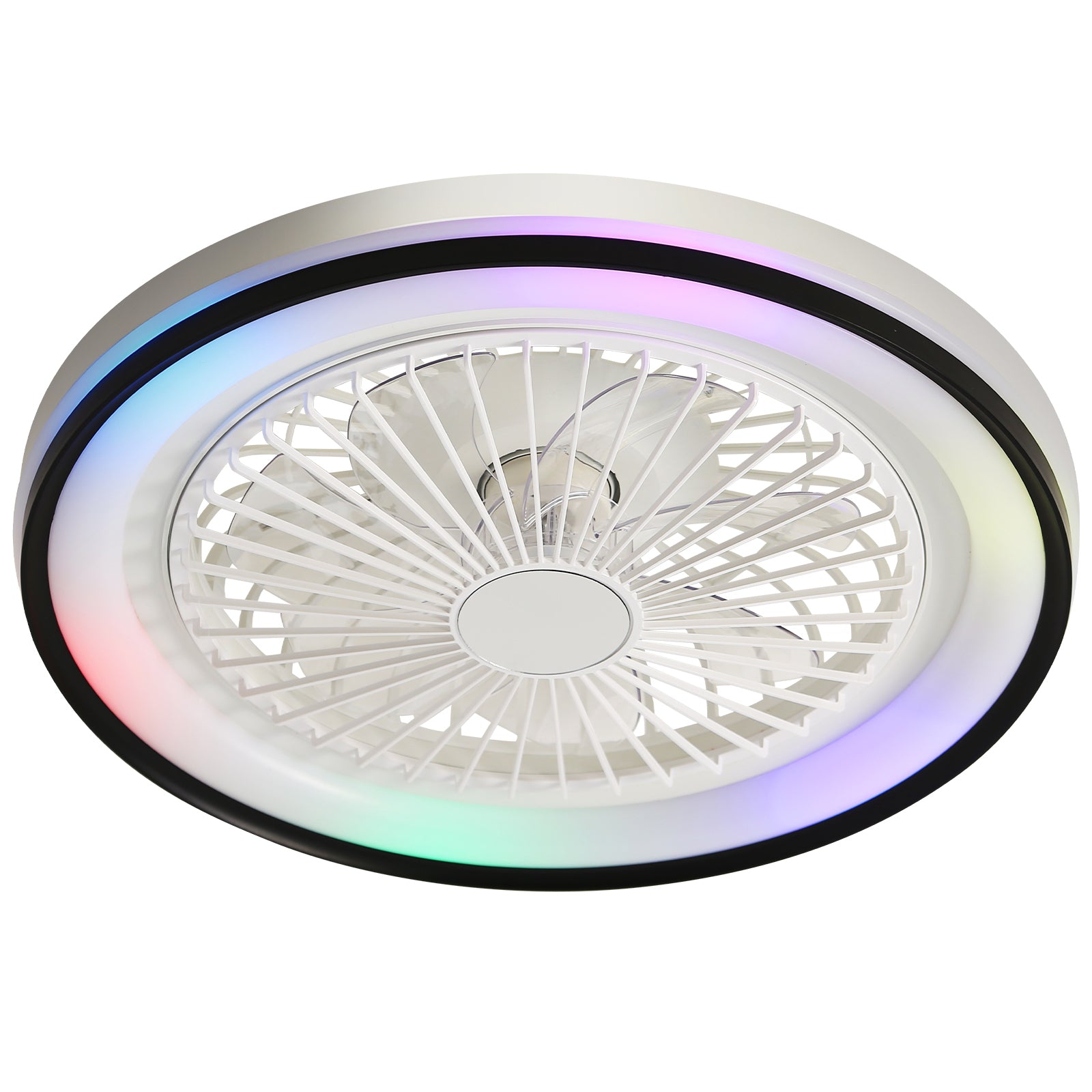
If you want something a little more fun, this RGB fan is surprisingly cool. The color-changing LED lights let you set the mood—warm white for relaxing, cool white for working, or even colored lighting for movie nights.
The enclosed design is practical too. It keeps dust and bugs out, which means less cleaning. And with six speed settings, you can fine-tune the airflow way more precisely than with a standard three-speed fan.
The dimmable lighting is clutch for bedrooms. You can have bright light when you need it and dim it down for nighttime without getting up.
Best for: Bedrooms, kids' rooms, media rooms, modern apartments
Room size: Up to 200 sq ft
Key features: RGB color-changing lights, 6-speed control, enclosed design, dimmable LED
5. 52" Outdoor Ceiling Fan with Remote Control - $194.99

Need a fan for your patio or covered porch? This outdoor model is built to handle the elements. The ABS blades won't warp or fade in the sun, and the motor housing is weather-resistant.
At under $80, this is an absolute steal for an outdoor fan. Most outdoor-rated fans cost twice as much. The 52-inch span provides solid airflow for outdoor dining areas or seating spaces.
The DC motor is energy-efficient, which matters if you're running this fan for hours during summer barbecues. And the six-speed control means you can adjust for those unpredictable outdoor breezes.
Best for: Covered patios, porches, outdoor living spaces, gazebos
Room size: Up to 400 sq ft outdoor space
Key features: Weather-resistant, ABS blades, DC motor, 6-speed control, remote included
Shop the Outdoor Ceiling Fan →
6. 20" Indoor Caged Ceiling Fan with Light - $261.99

Small rooms need love too. This 20-inch caged fan is perfect for bathrooms, walk-in closets, laundry rooms, or small bedrooms. The compact size means it won't overwhelm the space, but it still moves plenty of air.
The cage design adds a nice industrial touch, and the integrated LED bulb provides enough light for most small spaces. The remote control is a nice bonus—you don't have to install a wall switch if you don't want to.
Installation is straightforward, and the low price point makes it easy to add fans to multiple small spaces throughout your home.
Best for: Small bedrooms, bathrooms, closets, laundry rooms, home offices
Room size: Up to 100 sq ft
Key features: Compact 20-inch size, caged design, LED light included, remote control
7. 20" Indoor White Low Profile Ceiling Fan - $109.99

This is the minimalist's dream fan. Clean white finish, low-profile design, and no unnecessary frills. It just works, and it looks good doing it.
The 20-inch size is ideal for smaller spaces where you want airflow without a bulky fixture. The low-profile mount keeps it tight to the ceiling, which is perfect for rooms with limited headroom.
The white finish is versatile—it'll match pretty much any decor style. And the simple design means it won't go out of style in a few years.
Best for: Small bedrooms, nurseries, home offices, minimalist spaces
Room size: Up to 120 sq ft
Key features: Low-profile design, clean white finish, compact size, quiet operation
Shop the White Low Profile Fan →
How to Choose the Right Size Ceiling Fan
Size really does matter when it comes to ceiling fans. Too small, and you won't feel much airflow. Too big, and it'll look ridiculous and might even be dangerous.

Here's a quick guide:
- Up to 75 sq ft: 29-36 inch fan
- 76-144 sq ft: 36-42 inch fan
- 144-225 sq ft: 44-50 inch fan
- 225-400 sq ft: 50-54 inch fan
- Over 400 sq ft: 54+ inch fan or multiple fans
For ceiling height, you want at least 7 feet of clearance between the floor and the fan blades. If you have low ceilings (8 feet or less), go with a low-profile or flush-mount fan.
Installation Tips
Most ceiling fans are DIY-friendly if you're comfortable with basic electrical work. That said, if you're not confident, hire an electrician. A poorly installed fan is a safety hazard.
Here are a few tips:
- Make sure your ceiling box is rated for fan support (it should say so on the box)
- Use a fan brace if you're installing between joists
- Balance the fan after installation—most fans come with a balancing kit
- Test the reverse function to make sure it works (you'll want this in winter)
Energy Efficiency and Cost Savings
Let's talk money. A ceiling fan costs about $0.01 to $0.02 per hour to run, compared to $0.36 per hour for central AC. If you use your fan to supplement your AC, you can raise your thermostat by 4 degrees without feeling any warmer—and that can cut your cooling costs by up to 40%.
DC motor fans (like several on this list) are even more efficient than traditional AC motor fans. They use up to 70% less energy and run quieter too.
Over the course of a summer, a good ceiling fan can save you $100-200 on your energy bill. That means most of these fans will pay for themselves in one or two seasons.
Maintenance and Care
Ceiling fans are pretty low-maintenance, but a little care goes a long way:
- Dust the blades every month or so (a microfiber cloth works great)
- Check the mounting screws once a year to make sure everything's tight
- Clean the motor housing with a damp cloth
- If your fan starts wobbling, use the balancing kit that came with it
Most modern fans have sealed bearings, so you don't need to oil them. Just keep them clean and they'll run smoothly for years.
Smart Features Worth Considering
While the fans on this list focus on solid fundamentals, some newer models offer smart features like:
- WiFi connectivity for smartphone control
- Voice control through Alexa or Google Home
- Scheduling and automation
- Integration with smart thermostats
These features are nice to have, but they're not essential. A good remote control gets you 90% of the convenience at a fraction of the cost.
Frequently Asked Questions
What size ceiling fan do I need for a 12x12 room?
For a 12x12 room (144 square feet), you'll want a 42-44 inch ceiling fan. This size provides optimal airflow without overwhelming the space. If your ceilings are particularly high (over 9 feet), you might consider going up to a 48-inch fan.
Should ceiling fans be left on all the time?
No, ceiling fans cool people, not rooms. They work by creating a wind-chill effect on your skin, so there's no benefit to running them when nobody's in the room. Turn them off when you leave to save energy. The exception is if you're using the fan to circulate air throughout your home.
Which direction should my ceiling fan spin in summer?
In summer, your fan should spin counterclockwise (when looking up at it). This pushes air straight down, creating that cooling breeze. In winter, reverse it to clockwise on low speed—this pulls cool air up and pushes warm air down from the ceiling.
How much does it cost to run a ceiling fan 24/7?
Most modern ceiling fans cost between $0.24 and $0.48 per day to run continuously, or about $7-15 per month. DC motor fans are on the lower end of that range. Compare that to AC, which can cost $100+ per month, and you can see why fans are so cost-effective.
Can I install a ceiling fan where a light fixture was?
Maybe. You need to make sure the electrical box is rated for fan support (it should hold at least 50 pounds). Standard light fixture boxes often aren't strong enough. If you're not sure, have an electrician check it out—a falling fan is dangerous and expensive.
Do ceiling fans with lights use a lot of electricity?
Not really. LED lights (which most modern fans use) are incredibly efficient. The light portion typically adds only $0.01-0.02 per hour to your operating cost. The fan motor uses more energy than the lights.
What's the difference between AC and DC motor ceiling fans?
DC motors are more energy-efficient (up to 70% less energy), quieter, and offer more speed options. They're also lighter and can be controlled more precisely. AC motors are the traditional option—they're reliable and usually cheaper upfront, but they use more electricity and are louder.
How do I stop my ceiling fan from wobbling?
First, make sure all the screws are tight—on the mounting bracket, the motor housing, and the blade brackets. If it still wobbles, use the balancing kit that came with your fan. Clip the balancing weight to different blades until you find the spot that minimizes wobble, then attach it permanently.
Can ceiling fans be used in rooms with low ceilings?
Yes, but you need a low-profile or flush-mount fan. Building codes require at least 7 feet of clearance between the floor and the fan blades. Low-profile fans are designed to mount close to the ceiling, making them perfect for 8-foot ceilings.
Are expensive ceiling fans worth it?
It depends. More expensive fans usually have better motors (quieter, more efficient), higher-quality materials (less wobble, longer lifespan), and better warranties. If you're putting a fan in a bedroom where you'll hear it every night, spending extra for a quiet DC motor is worth it. For a garage or workshop, a budget fan is probably fine.
Final Thoughts
Choosing the right ceiling fan doesn't have to be complicated. Think about your room size, ceiling height, and what features actually matter to you. Do you need lighting? Is quiet operation important? How much are you willing to spend?
The fans on this list cover pretty much every scenario—from small bedrooms to large living rooms, from budget-friendly to premium options. They're all solid choices that'll keep you comfortable and save you money on energy bills.
My top pick? If you're only getting one fan, go with the 52" Iron Wood Ceiling Fan. It's versatile enough for most rooms, looks great, and the quality is there. But honestly, you can't go wrong with any of these options.
Stay cool out there.
Ready to upgrade your home comfort? Shop our full collection of ceiling fans and find the perfect fit for every room in your house.
