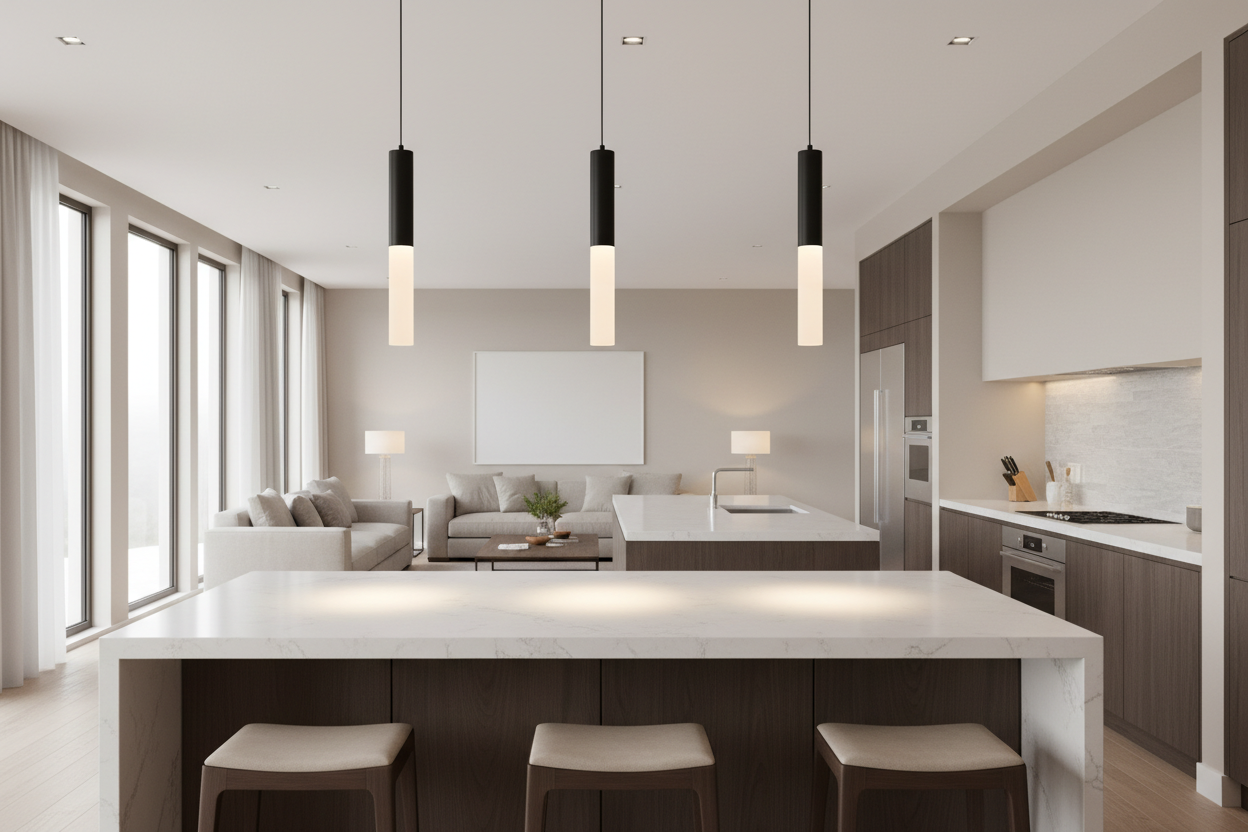
Why Kitchen Island Pendant Lighting Matters
Your kitchen island isn't just a workspace—it's the heart of your home where meals are prepped, homework gets done, and conversations flow over morning coffee. The right pendant lighting transforms this functional surface into a stunning focal point while providing the task lighting you actually need.
Unlike recessed ceiling lights that cast shadows or under-cabinet strips that miss the mark, pendant lights hang at the perfect height to illuminate your work surface without glare. They also add personality to what might otherwise be a purely utilitarian space.
Understanding Pendant Light Basics for Kitchen Islands
What Makes Island Pendant Lighting Different
Kitchen island pendants serve a dual purpose that sets them apart from other lighting fixtures. First, they provide focused task lighting exactly where you need it—over cutting boards, mixing bowls, and serving platters. Second, they act as decorative elements that define your kitchen's style, whether that's modern industrial, farmhouse cozy, or contemporary minimalist.
The key difference from other pendant applications is height and spacing. Island pendants typically hang 30-36 inches above the countertop, creating a visual connection between the ceiling and work surface without blocking sightlines across the room.
Single vs. Multiple Pendant Configurations
The size of your island dictates whether you need one statement piece or multiple fixtures. Islands under 4 feet work well with a single large pendant centered over the surface. For islands 4-6 feet long, two pendants spaced evenly create balanced illumination. Longer islands—6 feet and beyond—benefit from three or more pendants to eliminate dark spots.
Our Black & Gold Adjustable 3-Light Pendant Chandelier ($175.60) solves this spacing challenge elegantly. The three independently hanging lights provide uniform coverage over longer islands while the adjustable cables let you customize the height for your specific ceiling and counter configuration.

Choosing the Right Size and Scale
Measuring Your Space Correctly
Before you fall in love with a fixture, grab a tape measure. The width of your pendant (or combined width of multiple pendants) should be roughly two-thirds to three-quarters the width of your island. For a 36-inch wide island, look for pendants 24-27 inches wide total.
Height matters just as much. Measure from your countertop to the ceiling, then subtract 30-36 inches—that's your maximum pendant height. If you have 8-foot ceilings, you're working with fixtures around 30-32 inches tall maximum. Higher ceilings give you more flexibility to make a dramatic statement.
Proportion Guidelines That Actually Work
Visual weight is trickier than pure measurements. A delicate glass pendant might measure 12 inches wide but feel smaller than a bold metal fixture of the same diameter. Consider the visual density of your chosen style.
The 11.75" Matte Gold Glass Fan Shape Pendant ($184.76) demonstrates this principle perfectly. Despite its compact 11.75-inch diameter, the cascading crystal-inspired glass beading creates substantial visual presence without overwhelming smaller islands or breakfast bars.

Popular Pendant Styles for Kitchen Islands
Industrial and Modern Designs
Industrial pendants bring raw, honest materials into your kitchen—exposed bulbs, metal cages, and utilitarian shapes that celebrate function. This style works particularly well in loft-style homes, modern farmhouses, and contemporary spaces that embrace mixed materials.
The beauty of industrial design lies in its versatility. Black metal fixtures ground a space, while mixed finishes like our black and gold combination add sophistication without losing that edgy, workshop-inspired aesthetic. The cylindrical mesh shades on the 3-light chandelier create intriguing shadow patterns on your countertop while the gold interior reflects warm light.
Transitional and Contemporary Options
If your kitchen blends traditional elements with modern sensibilities, transitional pendants bridge that gap. These fixtures typically feature clean lines softened by curves, mixed materials, and finishes that work across style boundaries.
The Industrial Iron Modern Copper Color Double Pendant Light ($259.99) exemplifies this approach. The copper electroplated finish adds warmth that complements wood cabinetry, while the streamlined two-headed design keeps things contemporary. The adjustable suspension height means you can adapt it to various ceiling heights and decorative preferences.

Glamorous and Decorative Fixtures
Not every kitchen needs to be understated. If your space features marble countertops, glass-front cabinets, or high-end appliances, glamorous pendants with crystal elements, metallic finishes, or sculptural shapes elevate the entire room.
The matte gold and glass pendant with its fan-shaped cascading beading brings that jewelry-box sparkle without the fussiness of traditional chandeliers. It's glamorous enough for special occasions but practical enough for everyday meal prep.
Technical Considerations for Installation
Electrical Requirements and Hardwiring
Most kitchen island pendants require hardwired installation connected directly to your home's electrical system. This isn't a plug-in-and-go situation—you're working with 120V household wiring that needs to be done correctly for safety and code compliance.
If you're comfortable with basic electrical work and your local codes allow homeowner installation, the process involves connecting hot, neutral, and ground wires from your ceiling junction box to the fixture. However, if you're uncertain about any step, hiring a licensed electrician is money well spent. Improper installation can create fire hazards or void your homeowner's insurance.
All three pendants featured here use standard E26 base sockets, which means you have flexibility in bulb choice—LED for energy efficiency, incandescent for warm traditional light, or specialty bulbs for specific color temperatures.
Bulb Selection and Wattage Limits
The bulbs you choose dramatically affect both the quality of light and your energy bills. Each fixture specifies maximum wattage per socket—typically 40-60W for these styles. Exceeding this limit creates heat buildup that can damage the fixture or create fire risk.
LED bulbs solve this elegantly. A 9W LED produces the same light output as a 60W incandescent while generating minimal heat and lasting 15-25 times longer. For kitchen task lighting, look for bulbs in the 2700-3000K color temperature range—warm enough to make food look appetizing but bright enough for detailed work.
Dimmer compatibility adds another layer of functionality. Installing a dimmer switch lets you dial down the brightness for ambient evening lighting or crank it up for detailed recipe work. Just verify your LED bulbs are labeled "dimmable"—not all are.
Adjustable Height Features
Fixed-height pendants force you to work around their dimensions. Adjustable fixtures like our featured options give you control over the final installation. This matters more than you might think.
If your island doubles as a dining surface, you might want pendants slightly higher to avoid head-bumping during meals. If it's purely a prep space, lower placement maximizes task lighting. Adjustable cables or rods let you fine-tune this after installation rather than committing to a single height during the initial setup.
Spacing and Placement Strategies
The 30-36 Inch Rule Explained
The standard recommendation of hanging pendants 30-36 inches above your countertop isn't arbitrary—it's based on ergonomics and lighting physics. At this height, the light spreads across your work surface without creating glare in your eyes when you're standing at the island.
Taller individuals might prefer the higher end of this range, while shorter cooks benefit from lower placement. If your island includes bar seating, consider the seated eye level too. You want enough clearance that seated guests aren't staring directly into bulbs.
Spacing Multiple Pendants Evenly
For two-pendant installations over a 6-foot island, start by finding the center point (36 inches from each end). Then place each pendant 18 inches to either side of center, creating 36-inch spacing between fixtures and 18 inches from each end.
Three pendants over an 8-foot island? Divide the length into quarters. Place pendants at the 24-inch, 48-inch, and 72-inch marks, leaving 24 inches from each end. This creates balanced illumination without dark spots or overlapping pools of light.
The 3-light chandelier simplifies this calculation since the three lights are already configured in a balanced arrangement. You just need to center the fixture over your island length.
Matching Pendant Lighting to Your Kitchen Style
Modern and Minimalist Kitchens
Clean-lined kitchens with handleless cabinets, integrated appliances, and monochromatic color schemes need pendants that respect that simplicity. Look for geometric shapes, single-material construction, and finishes that blend rather than contrast.
Black metal pendants work beautifully here—they provide necessary visual weight without adding color complexity. The mesh cylindrical shades on the 3-light fixture offer texture without busyness, and the gold interior adds just enough warmth to prevent the space from feeling cold.
Farmhouse and Rustic Spaces
Farmhouse kitchens embrace mixed materials, visible textures, and finishes that show character. Copper, bronze, and aged metals fit naturally into this aesthetic, as do fixtures with visible hardware and industrial influences.
The copper-colored double pendant bridges farmhouse warmth with modern function. The electroplated finish has depth that solid-painted fixtures lack, and the exposed suspension system adds to the honest, unfussy vibe that defines farmhouse style.
Transitional and Eclectic Designs
If your kitchen mixes Shaker cabinets with contemporary countertops, or pairs subway tile with modern hardware, you need lighting that works across style boundaries. Transitional pendants typically feature classic shapes executed in contemporary materials, or modern forms softened with traditional finishes.
Mixed-metal finishes excel in transitional spaces. The black and gold combination works with both warm and cool color palettes, complementing brass hardware while also coordinating with stainless appliances.
Lighting Layers: Combining Pendants with Other Fixtures
Ambient, Task, and Accent Lighting
Pendant lights over your island handle task lighting, but a well-designed kitchen needs three lighting layers. Ambient lighting—typically recessed ceiling fixtures or flush mounts—provides overall illumination. Task lighting focuses on work areas. Accent lighting highlights architectural features or decorative elements.
Your island pendants contribute to both task and ambient layers depending on bulb choice and dimmer settings. Bright LED bulbs with dimmer switches let you adjust from focused work light during meal prep to soft ambient glow during dinner parties.
Coordinating with Other Kitchen Fixtures
Your island pendants don't need to match your other lighting exactly, but they should coordinate. If you have brushed nickel cabinet hardware, chrome faucets, and stainless appliances, introducing warm brass pendants creates intentional contrast. But mixing chrome, nickel, brass, and copper randomly looks unplanned.
A good rule: pick two or three metal finishes and stick with them throughout the space. Black and gold pendants pair well with matte black cabinet hardware and brass or gold faucets. Copper pendants coordinate with bronze hardware and warm wood tones.
Budget-Friendly Options Without Compromising Quality
What You Get at Different Price Points
Kitchen pendant pricing ranges from under $50 to well over $500 per fixture. Understanding what drives these differences helps you spend wisely.
Budget fixtures (under $100) typically use thinner metals, simpler finishes, and basic socket assemblies. They work fine for light-duty use but may show wear faster. Mid-range options ($100-250) like our featured pendants offer better materials, more durable finishes, and thoughtful design details like adjustable heights and quality electroplating.
Premium fixtures (over $250) often feature hand-blown glass, solid brass construction, or designer names. They're beautiful, but the functional difference for most homeowners doesn't justify the cost unless you're doing a high-end renovation.
Where to Invest and Where to Save
Invest in fixtures over high-use areas like your main island. This is where you'll notice quality differences in finish durability and light quality. Save on pendants in less-critical locations like a small breakfast bar or coffee station.
The $84.76 glass pendant offers remarkable value—you get the glamorous look of crystal at a fraction of the cost, with quality construction that will last years. The $175.60 three-light chandelier costs less than buying three individual pendants while providing coordinated style and easier installation.
Installation Tips and Common Mistakes to Avoid
DIY vs. Professional Installation
If you're replacing an existing fixture and feel comfortable working with electrical wiring, pendant installation is a manageable DIY project. You'll need basic tools—wire strippers, screwdrivers, voltage tester—and the ability to follow wiring diagrams.
Call a professional if you're adding new fixtures where none existed, if your ceiling box isn't rated for the fixture weight, or if you're uncertain about any aspect of the electrical work. The $100-200 installation cost is cheap insurance against electrical fires or code violations.
Common Installation Errors
The most frequent mistake is hanging pendants too high or too low. Too high and you lose task lighting effectiveness. Too low and you're constantly ducking around them. Start at 32 inches above the counter and adjust from there based on your ceiling height and personal preference.
Another common error is inadequate support. Kitchen pendants can be heavy, especially multi-light fixtures or those with glass components. Your ceiling junction box must be rated for the fixture weight. If it's not, install a fan-rated box that can handle heavier loads.
Finally, many people forget to turn off power at the breaker before starting work. Testing with a voltage tester isn't optional—it's the difference between a successful project and a trip to the emergency room.
Tools and Materials You'll Need
For a basic pendant installation, gather these items: voltage tester, wire strippers, screwdrivers (both Phillips and flathead), wire nuts (usually included with the fixture), electrical tape, and a ladder tall enough to work comfortably at ceiling height.
If you're installing a dimmer switch, add that to your list along with a compatible wall plate. For adjustable-height pendants, you may need wire cutters to trim excess cable to your desired length.
Maintenance and Long-Term Care
Cleaning Different Materials
Metal pendants need occasional dusting and periodic cleaning with appropriate products. For black painted finishes, use a soft microfiber cloth dampened with water and mild dish soap. Avoid abrasive cleaners that can scratch the finish.
Copper and brass finishes develop patina over time—some people love this aged look while others prefer the original shine. To maintain brightness, use a copper or brass cleaner every few months. To embrace patina, just dust regularly and let the finish age naturally.
Glass elements like the cascading beading on the gold pendant need more frequent attention since they show dust and fingerprints easily. A glass cleaner and soft cloth work well, or use a mixture of equal parts water and white vinegar for a streak-free shine.
Bulb Replacement and Upgrades
LED bulbs last 15,000-25,000 hours, but they do eventually fail. When replacing bulbs, it's a good opportunity to upgrade to newer technology. LED efficiency and color quality improve constantly—bulbs from five years ago can't match current options for color rendering and dimming performance.
Always replace bulbs with the same base type (E26 for these fixtures) and stay within the maximum wattage rating. If you're switching from incandescent to LED, you can use much lower wattage while getting the same or better light output.
When to Consider Replacement
Quality pendant fixtures should last 10-15 years or more with proper care. Consider replacement if the finish is deteriorating beyond cleaning, if electrical components are failing repeatedly, or if the style no longer fits your updated kitchen.
Sometimes it's not about failure but evolution. Kitchen trends change, and what looked perfect in 2015 might feel dated in 2025. The good news is that pendant replacement is relatively simple compared to other kitchen updates—you can refresh your space's entire look for a few hundred dollars and an afternoon of work.
Energy Efficiency and Smart Lighting Options
LED vs. Incandescent: The Real Cost Difference
A 60W incandescent bulb costs about $0.70 per year in electricity at average rates. An equivalent 9W LED costs about $0.11 annually. Over the LED's 20-year lifespan, you save about $12 per bulb in electricity plus the cost of replacing the incandescent 20+ times.
For a three-light fixture, that's $36 in electricity savings plus avoiding 60+ bulb replacements. The LED bulbs cost more upfront—$8-12 each versus $1-2 for incandescent—but the payback period is under two years.
Smart Bulb Integration
Smart LED bulbs add another dimension to your kitchen lighting. You can control brightness and color temperature from your phone, set schedules for automatic on/off, or integrate with voice assistants for hands-free control while cooking.
Some smart bulbs offer tunable white light, letting you shift from cool 5000K light for detailed prep work to warm 2700K light for evening ambiance. This flexibility is particularly valuable over kitchen islands that serve multiple functions throughout the day.
The catch is cost—smart bulbs run $15-40 each versus $8-12 for standard LEDs. For a three-light fixture, you're looking at $45-120 in bulbs. Whether that's worthwhile depends on how much you value the convenience and customization.
Complementing Your Kitchen Island Lighting
Coordinating with Your Workspace
Your kitchen island lighting doesn't exist in isolation—it needs to work with your overall workspace design. If you have a standing desk in your home office, you understand how proper task lighting affects productivity and comfort. The same principles apply to kitchen work surfaces.
Just as adjustable desks let you customize your work height, adjustable pendant lights let you optimize your lighting height. This flexibility is particularly valuable in kitchens that serve multiple purposes—food prep, homework station, casual dining, and entertaining.
Creating a Cohesive Home Aesthetic
If you've invested in quality ergonomic office furniture for your workspace, applying that same attention to detail in your kitchen makes sense. Both spaces benefit from thoughtful design that balances function and aesthetics.
The industrial-modern aesthetic of black and gold pendants coordinates beautifully with contemporary office furniture, creating visual continuity between spaces. This is particularly important in open-concept homes where kitchen and living areas flow together.
Frequently Asked Questions
How low should pendant lights hang over a kitchen island?
The standard recommendation is 30-36 inches above the countertop surface. This height provides effective task lighting without creating glare or obstructing sightlines across the room. Taller individuals may prefer the higher end of this range (34-36 inches), while shorter cooks often find 30-32 inches more comfortable. If your island includes bar seating, consider seated eye level—you want enough clearance that guests aren't staring directly into light bulbs.
How many pendant lights do I need for my kitchen island?
Island length determines the number of pendants you need. Islands under 4 feet work well with a single large pendant centered over the surface. Islands 4-6 feet long typically need two pendants spaced evenly. Longer islands—6 feet and beyond—benefit from three or more pendants to eliminate dark spots. As an alternative, a multi-light fixture like the 3-light chandelier provides coverage equivalent to three individual pendants with simpler installation.
Can I install pendant lights myself or do I need an electrician?
If you're replacing an existing fixture and feel comfortable working with electrical wiring, pendant installation is a manageable DIY project. You'll need basic tools and the ability to follow wiring diagrams. However, hire a licensed electrician if you're adding new fixtures where none existed, if your ceiling box isn't rated for the fixture weight, if you're uncertain about any aspect of the electrical work, or if local codes require professional installation. The $100-200 installation cost is worthwhile insurance against electrical hazards.
What's the best bulb type for kitchen island pendant lights?
LED bulbs are the best choice for kitchen pendants. They use 75-85% less energy than incandescent bulbs, last 15-25 times longer, and generate minimal heat. For kitchen task lighting, choose bulbs in the 2700-3000K color temperature range—warm enough to make food look appetizing but bright enough for detailed work. Look for bulbs labeled "dimmable" if you plan to install a dimmer switch. Always stay within the fixture's maximum wattage rating, though LED bulbs make this easy since a 9W LED produces the same light as a 60W incandescent.
How do I choose pendant size for my kitchen island?
The width of your pendant (or combined width of multiple pendants) should be roughly two-thirds to three-quarters the width of your island. For a 36-inch wide island, look for pendants totaling 24-27 inches wide. Height is equally important—measure from countertop to ceiling and subtract 30-36 inches to find your maximum pendant height. Also consider visual weight, not just physical dimensions. A delicate glass pendant might measure 12 inches wide but feel smaller than a bold metal fixture of the same diameter.
Should my island pendants match my other kitchen lighting?
Your island pendants don't need to match other fixtures exactly, but they should coordinate. Pick two or three metal finishes and use them consistently throughout the space. For example, black and gold pendants pair well with matte black cabinet hardware and brass or gold faucets. Copper pendants coordinate with bronze hardware and warm wood tones. Avoid randomly mixing chrome, nickel, brass, and copper—this looks unplanned rather than intentionally eclectic.
What's the difference between hardwired and plug-in pendant lights?
Hardwired pendants connect directly to your home's electrical system through a ceiling junction box. They provide a clean, permanent installation without visible cords but require electrical work during installation. Plug-in pendants have a cord that runs to a wall outlet, making them easier to install but less suitable for kitchen islands where the cord would be visible and potentially in the way. Most kitchen island pendants are hardwired for this reason.
How much should I expect to spend on quality kitchen island pendants?
Quality kitchen island pendants typically range from $75-250 per fixture. Budget options under $75 often use thinner materials and simpler finishes that may not hold up to kitchen conditions. Mid-range fixtures ($75-250) offer better construction, durable finishes like electroplating, and thoughtful features like adjustable heights. Premium fixtures over $250 may feature hand-blown glass or designer names, but the functional difference doesn't always justify the cost for most homeowners. The featured pendants range from $84.76 to $259.99, offering excellent value in the mid-range category.
Can I use pendant lights over an island with a cooktop?
You can, but with important considerations. Pendants over cooktops need to be heat-resistant and positioned high enough to avoid grease splatter—typically 36-42 inches above the cooking surface rather than the standard 30-36 inches. Metal pendants handle heat better than glass or fabric shades. However, a proper range hood is essential for ventilation, and some building codes prohibit decorative lighting directly over cooktops. Check local codes and consider whether a hood-mounted light might be more practical for this specific application.
How do I clean and maintain pendant lights over my kitchen island?
Maintenance depends on the material. Metal pendants need occasional dusting and periodic cleaning with a soft microfiber cloth dampened with water and mild dish soap—avoid abrasive cleaners that scratch finishes. Glass elements show dust and fingerprints easily, so clean them monthly with glass cleaner or a mixture of equal parts water and white vinegar. Copper and brass finishes develop patina over time; use a metal cleaner to maintain brightness or embrace the aged look. Always turn off power before cleaning, and avoid getting electrical components wet.
Making Your Final Decision
Choosing pendant lighting for your kitchen island comes down to balancing practical needs with personal style. Start with the technical requirements—measure your space, determine how many fixtures you need, and verify your electrical setup can support your choice. Then layer in aesthetic preferences that reflect your kitchen's overall design direction.
The three featured options represent different approaches to this balance. The Black & Gold 3-Light Chandelier ($175.60) offers comprehensive coverage with industrial-modern style and adjustable installation. The Copper Double Pendant ($259.99) brings warmth and transitional elegance to medium-sized islands. The Matte Gold Glass Pendant ($184.76) delivers glamorous impact at an accessible price point.
Whichever direction you choose, remember that lighting is one of the most impactful changes you can make to a space. The right pendant fixtures transform your kitchen island from a simple work surface into a beautifully lit, highly functional centerpiece that serves your family for years to come.
Ready to upgrade your kitchen island lighting? Explore our full collection of pendant fixtures and find the perfect match for your space and style.
